

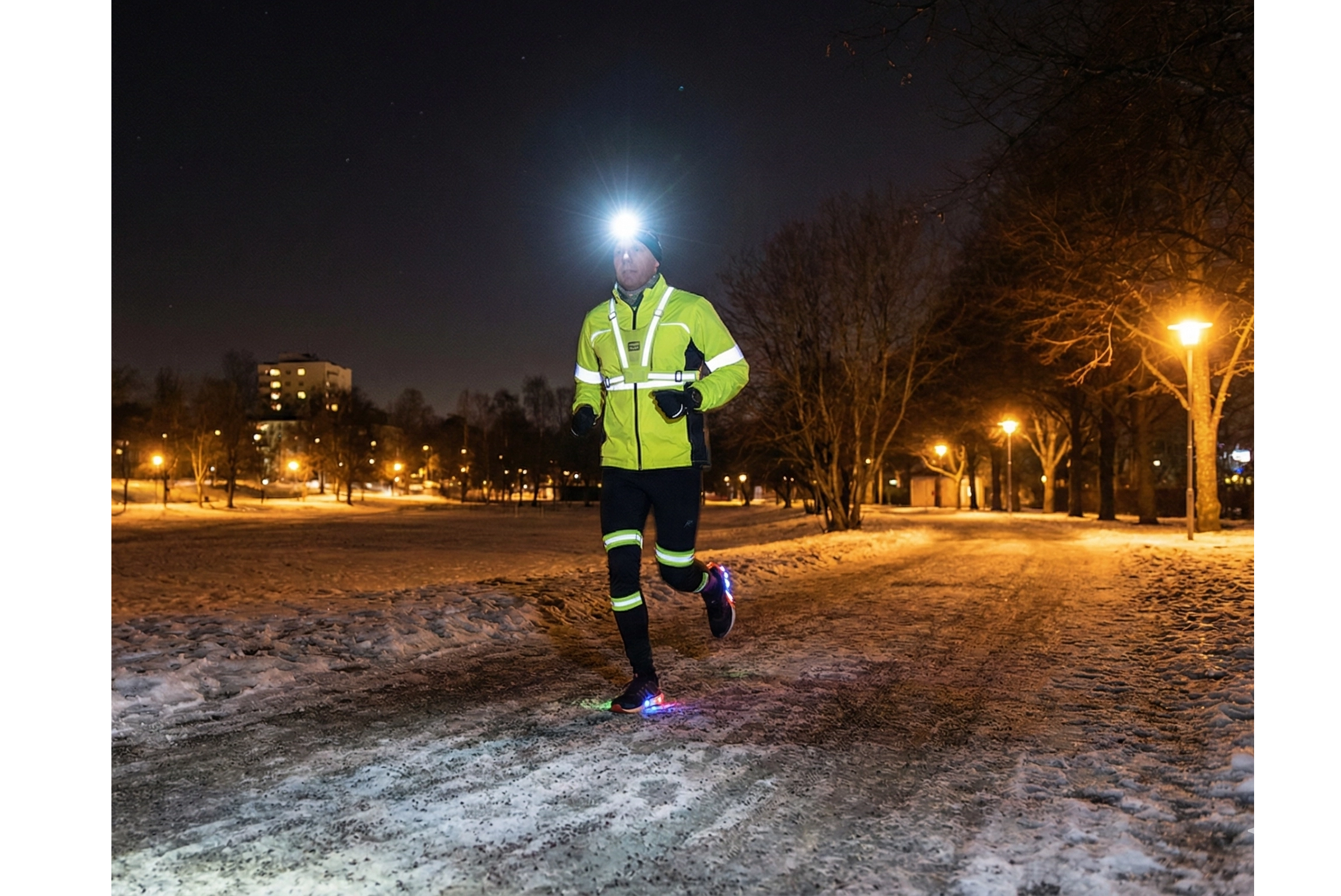
Winter is here, and with it comes shorter days and longer nights. For many of us with 9-to-5 jobs, that often means our only time to exercise is when the sun is down.
Running at night can be incredibly peaceful—the streets are quieter, and the air is crisp—but it does present a unique set of challenges. Whether you are a total beginner or a seasoned runner, safety should always be your top priority.
If you are planning to keep your mileage up during these colder months, here are the essential safety tips and gear you need to stay safe and warm.
1. See and Be Seen (Visibility is Key)
The number one rule of night running is visibility. Just because you can see a car’s headlights doesn’t mean the driver can see you. In the winter, drivers often deal with fogged windows or rain, making pedestrians even harder to spot.
- Wear Reflective Gear: Ditch the all-black workout clothes. Invest in a reflective vest or a jacket with high-visibility strips.
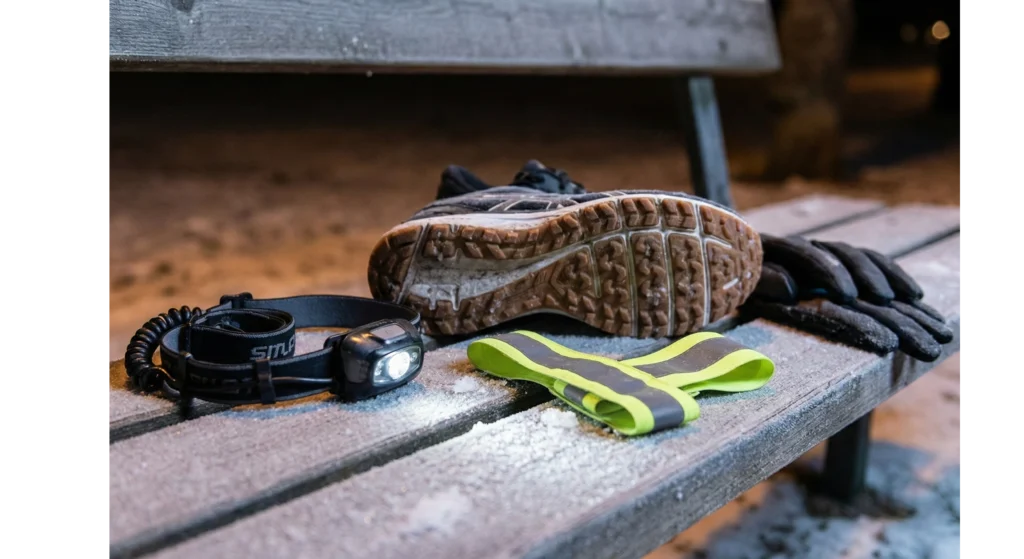
- Use Lights: A headlamp or a chest light illuminates the path ahead (preventing you from tripping over uneven sidewalks) and alerts oncoming traffic to your presence.
- Blinking LEDs: Small clip-on blinking lights for your shoes or back are an inexpensive way to add an extra layer of visibility.
2. Dress Smart for the Cold
It is tempting to bundle up in your heaviest jacket, but you will overheat quickly once you start moving. The secret to winter running is layering.
You want a moisture-wicking base layer to keep sweat off your skin, followed by an insulating layer. If it is windy or raining, top it off with a windbreaker. If you are unsure how to balance warmth with breathability, our guide on how to exercise in the cold breaks down exactly how to layer up and protect your lungs from the chill.
3. Footwear Matters More Than Ever
In the summer, you might get away with worn-out soles, but winter roads can be slippery, wet, or icy. You need traction.
Look for running shoes with a grippy rubber outsole. If you run on trails or snowy paths, you might even consider trail running shoes for that extra bite. Stability is crucial when the ground is unpredictable, so knowing how to choose running shoes that offer the right support is vital. You might also want to weigh the pros and cons of cushioned or flat shoes, as finding the right balance of ground feel can help prevent injuries when your footing isn’t 100% stable.
4. Stick to Well-Lit, Familiar Routes
Night time is not the time to explore a new shortcut through the woods. Stick to well-lit streets, public parks with good lighting, or a local track. Potholes, tree roots, and patches of ice are much harder to spot in the dark.
If you must run in a secluded area, consider sharing your live location with a friend or family member via your phone.
5. Ditch the Noise Cancellation
Music is a great motivator, but running at night requires your full attention. If you wear headphones, use bone-conduction headphones that leave your ears open, or keep the volume low enough to hear approaching cars or footsteps.
6. Don’t Fear the Cold
Finally, don’t let the thermometer scare you off. While it requires a bit more preparation, there are actually surprising benefits of cold weather exercise, including burning more calories and boosting your endurance, that make braving the chill completely worth it.
Running at night doesn’t have to be dangerous. With the right gear—lights, reflective clothing, and proper shoes—and a bit of common sense, you can turn the dark winter months into your most productive training season yet.
Stay safe, stay visible, and keep moving!