
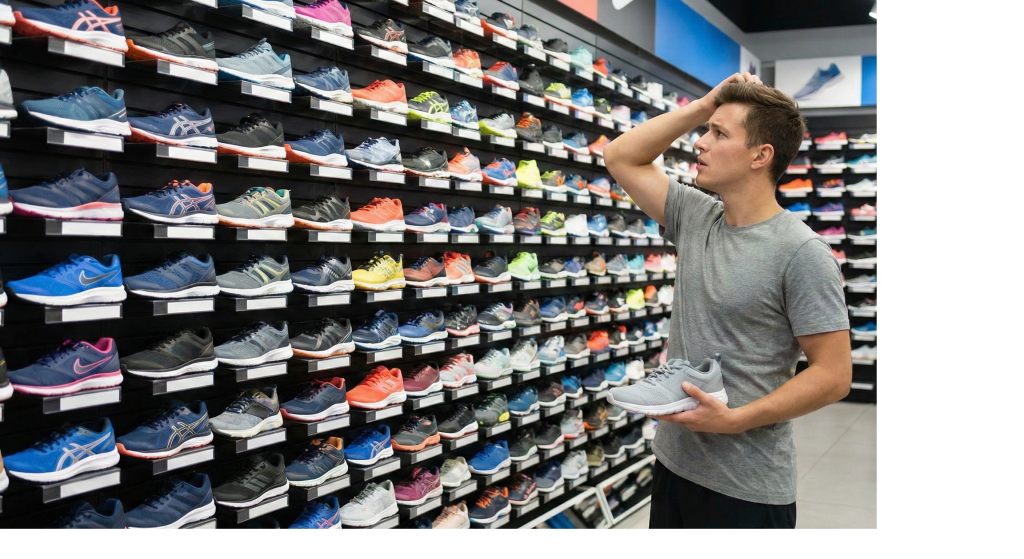
When starting a new sport, one of the main issues you face is buying gear—especially the footwear. Walking into a sports store and staring at a wall of 500 different shoes that all look exactly the same but cost wildly different prices can cause serious confusion and anxiety.
However, if you are a beginner, footwear is the single most important piece of gear you will buy. The right shoe prevents injury; the wrong shoe causes blisters, shin splints, and frustration. Here is your guide on how to choose sports shoes so you can make the right decision without the stress.
The 3 Universal Rules of Shoe Buying
Before we look at specific sports, memorize these three rules. They apply to everyone.
- Shop in the evening: Your feet swell throughout the day. A shoe that fits perfectly at 9:00 AM might strangle your foot by 6:00 PM. Buy shoes when your feet are at their largest.
- The “Thumb Test”: For almost every sport (except climbing or ballet), you should have about a thumb’s width of space between your longest toe and the end of the shoe.
- Ignore the “Cool Factor”: If the ugly shoe fits better than cool one, buy the ugly one. Your feet do not have eyes, they will thank you for your choice if you keep them away from pain.
1. The “I Want to Do Everything” Option (Start Here)
The goal: Versatility and Safety.
If you are the type of person who wants to try a CrossFit class on Monday, play a casual game of Padel on Wednesday, and go for a light jog on Saturday, do not buy a Running shoe.
You need a Cross-Trainer (often labeled as “Training Shoes” or “Gym Shoes”).
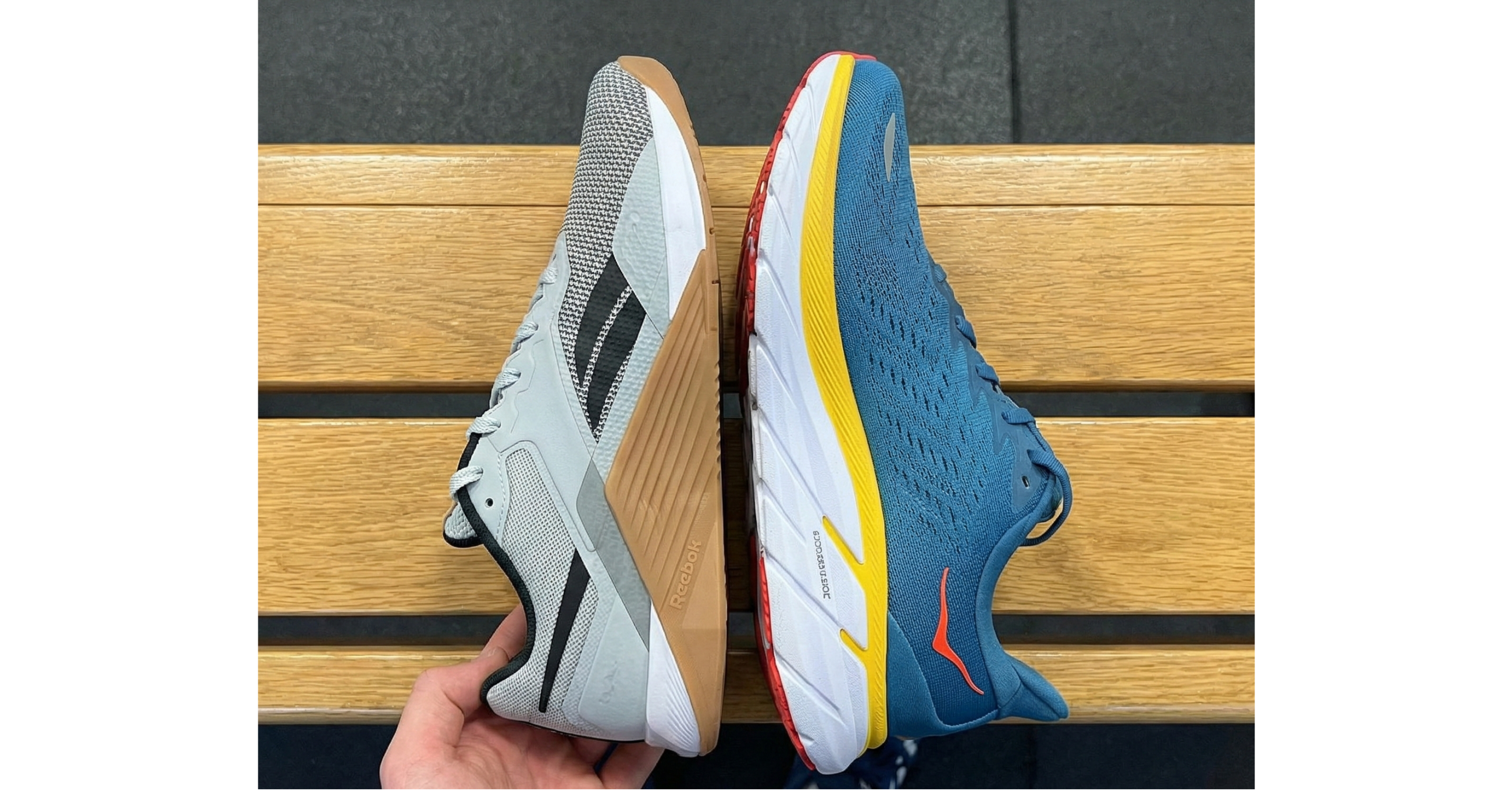
- Why? A running shoe is too squishy and unstable for lifting weights or moving sideways (like in tennis). You risk rolling your ankle. A Cross-Trainer has a flatter sole for stability, rubber on the sides for grip, but enough cushion for a short run.
- The Limit: These are perfect if you like to mix up your workouts. However, if you plan to run more than 5km at a time, you must switch to a dedicated Running shoe.
- Look for: Head to the “Training” section of the store. If you want specific examples to look up, the Nike Metcon and Reebok Nano are the most famous shoes in this category.
2. Running
The goal: Shock absorption and forward motion.
Running is high-impact. Each step sends a shockwave through your legs. You need a shoe that absorbs that shock so your knees don’t have to.
- The Basics: As a beginner, look for “Neutral Cushioning.” It should feel like walking on a firm marshmallow.
- Sizing Note: Running shoes often need to be a half-size bigger than your casual street shoes to prevent black toenails.
Want the full breakdown?
I’ve written a complete deep-dive on exactly how to analyze your gait and pick the perfect runner.
👉 Click here to read my Ultimate Guide to Running Shoes
3. Tennis & Padel
The goal: Lateral (side-to-side) stability.
Running shoes are designed to go forward. If you wear running shoes to play tennis or padel, you risk rolling your ankle when you shuffle sideways. You need a shoe that is wide at the bottom and stiff around the ankle to prevent tipping over.
- The Padel Specific: If you are playing Padel specifically, look for a “herringbone” pattern (zigzag lines) on the sole. This is crucial for gripping the artificial grass and sand.
Confused about Court Shoes?
👉 Click here to read my Detailed Guide to Tennis Shoes
4. Strength Training & The Gym
The goal: A solid, flat foundation.
Imagine trying to squat while standing on a mattress. That is what it feels like to lift weights in running shoes. It is unstable and dangerous.
- What to buy: You want a flat, hard sole.
- Budget Hack: Believe it or not, Converse Chuck Taylors or Vans are excellent for beginner weightlifting. They are flat, stable, and let you “feel” the floor to push efficiently.
5. Cycling
The goal: Power transfer.
If you cycle in soft sneakers, your foot flexes over the pedal, wasting energy and straining your arch.
- Flat Pedals (Beginner): You don’t need “clip-in” shoes yet. Wear a shoe with a stiff sole (like a skate shoe or a specific “flat” mountain bike shoe). The stiffer the sole, the more power goes into the bike.
- Clip-in (Intermediate): Eventually, you may want shoes that “click” into the pedals (cleats). If you go this route, practice unclipping on a grassy field before hitting the road!
One Final Tip
Don’t be afraid to jog, jump, or lunge in the store. Yes, you will look a little silly. But it is much better to look silly for 2 minutes in a store than to be in pain for 2 months on the field.
Ready to get started? Go check your current sneaker size, grab a pair of socks you actually plan to wear for sports, and head to the store (just be sure it’s not early in the morning)!